
- Chennai
- Tamil Nadu
- India
- World
- EntertainmentEntertainment
- Business
- Sports
- Lifestyle
- Technology
- Videos
- Explainers
- Editor's Picks
Multiple sclerosis, an autoimmune disease that affects 2.9 million people, presents a biological puzzle. Many researchers suspect that the disease is triggered by a virus, known as Epstein-Barr, which causes the immune system to attack the nerves and can leave patients struggling to walk or talk. But the virus can’t be the whole story, since nearly everyone is infected with it at some point in life.
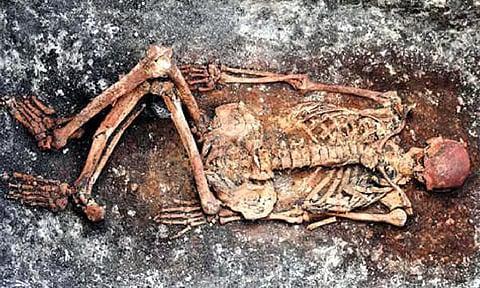
A new study found a possible solution to this paradox in the skeletal remains of a lost tribe of nomads who herded cattle across the steppes of western Asia 5,000 years ago. It turns out that the nomads carried genetic mutations that most likely protected them from pathogens carried by their animals, but that also made their immune systems more sensitive. These genes, the study suggests, made the nomads’ descendants prone to a runaway immune response. The finding is part of a larger, unprecedented effort to understand how the evolutionary past has shaped the health of living people. Researchers are analysing thousands of genomes of people who lived between Portugal and Siberia and between Norway and Iran roughly 3,000-11,000 years ago. They hope to trace the genetic roots of not only multiple sclerosis, but also diabetes, schizophrenia and many other illnesses.
“We are taking ancient human genomics to a whole new level,” said Eske Willerslev, a geneticist at the University of Copenhagen who led the effort. The researchers published the multiple sclerosis study as well as three other papers on the genetics and health of ancient peoples on Wednesday in the journal Nature. For over a decade, Dr. Willerslev and other researchers have been pulling DNA from ancient human bones. By comparing the surviving genetic material with that of living people, the scientists have been able to track some of the most significant migrations of people across the world. For example, they have chronicled the movement of farmers from what is now Turkey across Europe starting about 8,000 years ago. These early farmers encountered European hunter-gatherers who had lived on the continent for more than 30,000 years. In some places, hunter-gatherer DNA vanished from skeletons after the arrival of the farmers, suggesting violent conflicts. In other places, the two populations mingled enough to produce later generations with a mixed ancestry. Thousands of years passed before the next big migrational shift. About 5,000 years ago, European DNA began to show the genetic signatures of a group of pastoralists who lived on the steppes that stretch from Ukraine to Kazakhstan, called the Yamnaya.
The Yamnaya traveled on horses and in wagons across hundreds of miles of grassland, herding cows, goats and sheep along the way. Even without farms or cities, they prospered for centuries, burying their dead with gold and jewellery. Diabetes, for example, has become increasingly common in the modern world, in part due to the cheap, sugar-loaded food that makes up an increasing part of our diet. In earlier centuries, high-risk genes for diabetes may not have had the opportunity to give rise to the disease. Researchers are starting similar analyses of other diseases, such as schizophrenia and psoriasis.
The different evolutionary path of each population could reveal important insights about human biology in general. “By studying other parts of the world, we’re actually broadening our understanding of all human conditions today,” he said.
