
- Chennai
- Tamil Nadu
- India
- World
- EntertainmentEntertainment
- Business
- Sports
- Lifestyle
- Technology
- Videos
- Explainers
- Editor's Picks
Last week, the World Health Organization (WHO) asked China to provide information and data amid concerns about a surge in respiratory illnesses in children, mainly in northern regions, that the organisation has been monitoring since October. In an emergency conference call last Thursday, Chinese health officials told the WHO that the illnesses were caused by “known pathogens” and are limited to children, according to a WHO report released after the meeting.
The report said pathogens including influenza, respiratory syncytial virus (RSV), and mycoplasma pneumoniae, a bacterium that triggers pneumonia, have been circulating in China for weeks. It added that Chinese health officials said the “rise in respiratory illness has not resulted in patient loads exceeding hospital capacities.”
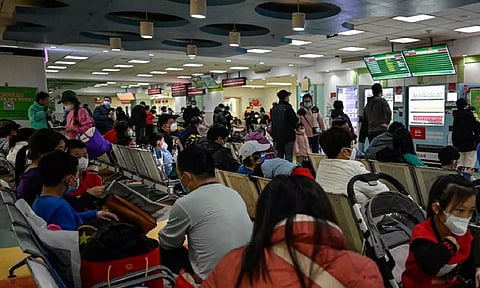
However, in the weeks leading up to the WHO’s request to Chinese officials, images of full hospital waiting rooms in Beijing circulated on social media, along with stories of worried parents waiting hours or even days in long lines to see a doctor.
A report published by China’s state-run CCTV in early November warned of a growing mycoplasma pneumonia outbreak. On November 13, China’s National Health Commission held a press conference and reported a nationwide increase in the “incidence of respiratory diseases, predominantly affecting children,” the WHO said in its report.
“Chinese authorities attributed this increase to lifting of COVID-19 restrictions and the arrival of the cold season,” it added. On Sunday, Chinese officials asked for more “fever clinics” to be set up around the country to deal with the surge in patient arrivals seeking medical treatment. In China, fever clinics are set up in hospital emergency departments to screen for infectious diseases to keep potential infections from spreading within the hospital.
Public alarm both in China and around the world about the rise in respiratory illnesses persists, despite the WHO and Chinese health officials saying that the rise in such cold and flu cases is “not unexpected.”The current situation has revived memories of China and the WHO being criticised for transparency issues in providing health data early in the COVID-19 pandemic, which started in the central Chinese city of Wuhan in late 2019.
Dong-Yan Jin, a professor of precision medicine at the University of Hong Kong, said that poor messaging from Chinese public health officials has contributed to the current panic and confusion among parents in China with sick children.
Public health officials “did not do a good job in the press conference” on November 13 in explaining the variations in data and the relatively mild prognosis of the cold and flu illnesses in question to the Chinese public or the outside world, Jin told DW. “This causes the general public to go into a panic. Many parents send their kids to the hospital because they are confused, and they worry about the situation,” he said.
The complaints of packed hospitals at the local level from people and physicians is partly attributed to problems with China’s health care system, said Jin.
“Everybody goes to the best hospitals, even if the kid has a mild flu, and wait there for hours or even days to see a doctor. That is the mentality to consult a doctor,” Jin said.
“It is getting from bad to worse because the press conference created the impression that this is something bad. They did not explain this well to the public, so everybody is worrying about their kids. Most of the patients do not need to go to the hospital,” he added.
