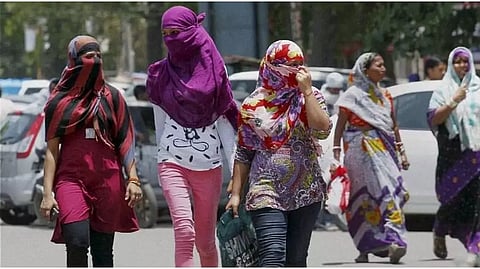

Nations that have contributed the least in carbon footprint and greenhouse gas emissions are the ones bearing the brunt of climate change. A blistering heat wave that hit two of India’s most populous states have stretched hospitals beyond capacity, with morgues running out of space, and wards bereft of electricity, while recording a death toll that has touched nearly 170 over the past few days. Heat-related fatalities in Uttar Pradesh have been pegged at 119, while 47 deaths were reported in neighbouring Bihar.
While states in north India usually witness extreme heat during summer, temperatures over the past few months were recorded as consistently above normal. Per the Indian Meteorological Department, the highs have hit 43.5° Celsius, although heat waves are declared only if temperatures breach 4.5° Celsius above normal, or if the temperature is over 45° Celsius. The heat in these regions has been hovering around the critical wet-bulb temperature — the threshold beyond which the human body cannot cool itself to a survivable point by perspiration. This metric is defined as 35° Celsius, adjusted for 100 percent humidity. The wet-bulb reading in Ballia, Uttar Pradesh had reached 34.15° Celsius last week.
A report by World Weather Attribution, an academic group that studies the source of extreme heat, revealed that a searing heat wave in April that affected parts of South Asia was rendered 30 times more likely by climate change. This April, 11 people lost their lives to heat stroke while attending a political rally in Maharashtra.
Forecasts from the National Oceanic Atmospheric Administration of the US, and the World Meteorological Organisation had recently highlighted the arrival of El Nino, a weather phenomenon known for warming the climate and disrupting weather patterns. El Nino’s arrival has been correlated with severe dry spells and droughts in the Indian subcontinent in the past. In combination with global warming, the weather phenomenon is predicted to hit record high temperatures.
This is not an issue endemic to India. In April, Thailand saw temperatures peaking past 45° Celsius. The same month, a WMO report attributed 15,700 deaths to heat waves in Europe, which now has the dubious distinction of being the fastest warming continent. This week, Beijing registered its hottest June ever.
A few weeks ago, the Centre for Policy Research had lauded government agencies for creating an early warning system to intimate people about heat waves. State governments had also opted for creative outlets to disseminate information regarding extreme weather — via radio jingles, billboards, WhatsApp and YouTube shorts.
There are caveats too as only a small group of cities and states have robust heat action plans in place to protect lives and livelihoods. Most of them set themselves ambitious targets like erecting cooling centres and improving access to water. However, funding has been a bottleneck. Many regions were inept at identifying vulnerable citizens while a majority of them underestimated the threat posed by such phenomena.
The scorched earth is here to stay as climate experts have warned that heat waves will continue. But India needs to stay ahead of the curve when it comes to safeguarding its citizens from such hazards. Preparing to deal with the consequences of such waves in a better manner will be a good starting point.