
- Chennai
- Tamil Nadu
- India
- World
- EntertainmentEntertainment
- Business
- Sports
- Lifestyle
- Technology
- Videos
- Explainers
- Editor's Picks
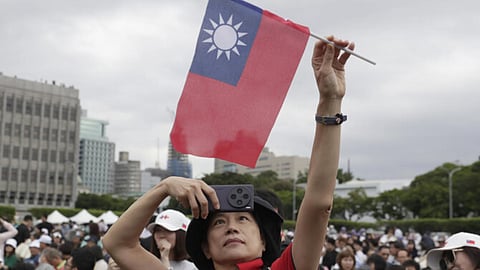
When I began covering Taiwan in the 1980s for The New York Times, it was a dictatorship under martial law, banning opposition parties and imprisoning dissidents. Per capita income was about $4,000, and the government once tried to bribe me for more favourable coverage.
Today, Taiwan is more democratic than the United States, according to the democracy index published by the Economist Intelligence Unit. Freedom House similarly ranks Taiwan as freer than the US.
Taiwan is also a wealthy technological powerhouse. Robots assist in restaurants, and its citizens enjoy a higher per capita income than the Japanese. Producing more than 90% of the world’s most advanced computer chips, Taiwan has become one of the most indispensable hubs in the global economy.
I saw a similar transformation in Vietnam. On my first visit in 1989, its per capita income was about $100. In one hotel in Hue, considered among the best then, rats fell from the ceiling of our room.
When I stayed at a Sheraton in Vietnam last month, with per capita income now around $5,000, skyscrapers lined the streets and reflected economic growth of about 8%, among the fastest globally. The country’s stock market soared 37% last year in dollar terms, and life expectancy in Ho Chi Minh City is 77 years, longer than in some U.S. states.
Such rapid transformation has occurred across much of Asia. Some countries have doubled their economies within a decade.
The Organisation for Economic Cooperation and Development notes that emerging Asian economies, including China, India, Indonesia and Vietnam, contributed more to global economic growth last year than the rest of the world combined and are expected to do so again in 2026.
Asia is far from uniform, but the gains first visible in Japan and the “tiger” economies — Hong Kong, South Korea, Taiwan and Singapore — later spread to China and Southeast Asia, and more recently to Bangladesh and India. A key factor has been sustained investment in human capital alongside prudent economic policies.
As American democracy and society grapple with inequality, polarisation and institutional mistrust, I have increasingly reflected on what the United States can learn from parts of Asia. The lesson that stands out is the transformative power of education.
This is not a new observation. My wife and I began visiting schools in Asia in the 1980s and later sent our children to school in Japan in the 1990s. Each visit left me struck by how deeply education is valued.
Across the Confucian-influenced societies of East Asia, studying is traditionally seen as the path to social mobility and honour. In Chinese villages, monuments still commemorate individuals who centuries ago earned top honours in imperial examinations.
In the United States, families invest heavily in their own children’s education but show less enthusiasm for broader public investment. Taiwan offers a contrast. For decades, its constitution required education, culture and science to account for at least 15% of the national budget.
Updated legislation mandates that at least 22.5% of combined government revenues across all levels go to education. In comparison, education accounts for just over 2% of US federal spending, though state and local governments contribute significantly more.
Education is, of course, no universal remedy. Poverty, inequality and injustice persist across Asia. North Korea, for instance, appears to maintain strong schooling but remains impoverished and authoritarian. Yet in several East Asian societies, respect for education runs so deep that it significantly shapes young people’s priorities.
“Dating or having a boyfriend is not necessary,” said Phan Thi My Duyen, a 20-year-old technology student in Ho Chi Minh City. “My priority is schoolwork.” Duyen, who grew up in a rural area, has developed a device to measure soil parameters to help farmers optimise fertiliser use and later built an S-RAM device.
She is among the beneficiaries of U-Go, a nonprofit founded by former Microsoft executive John Wood.
The organisation provides scholarships of about $800 to support talented low-income women in Asia and Africa in pursuing higher education.
East Asian education systems do attract criticism. Many parents and students complain that academic pressure limits childhood leisure and that memorisation is often prioritised over creativity. These concerns are valid. Yet the question remains whether the US could move modestly in the direction of placing greater emphasis on educational excellence and equity.
The New York Times
