
- Chennai
- Tamil Nadu
- India
- World
- EntertainmentEntertainment
- Business
- Sports
- Lifestyle
- Technology
- Videos
- Explainers
- Editor's Picks
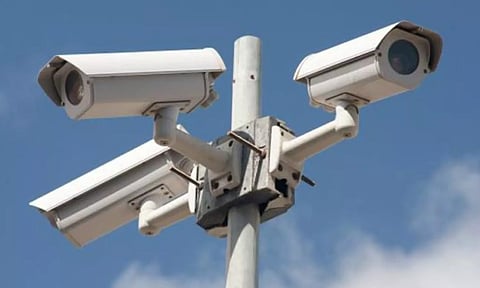
The Indian Railways has decided to greenlight a massive project to install of CCTV cameras in passenger compartments and locomotive engines to improve passenger safety. The decision was taken based on the encouraging results of a pilot project implemented in Northern Railways. Soon, all trains will have CCTV cameras fitted in the common areas and in the locomotives. The Railways claimed that this will enhance safety but without compromising on privacy. The mammoth project will cover 74,000 coaches and 15,000 locos.
On the face of it, the whole exercise might have some benefits and should be welcomed. However, studies have shown that mere installation of CCTV cameras has had limited utility in crime prevention in other settings where it has been used. The efforts to prevent crimes against women following the installation of CCTV cameras under the Nirbhaya Fund are a case in point. The presence of cameras at best acts as a deterrence for petty criminals – even that is debatable – but not for hardened and skilled criminals and habitual offenders.
Secondly, the CCTV footage is relatively more useful in conducting investigations, after the crime has been committed, in identifying the perpetrator, and then as evidence during the trial. Here again, there are limitations, especially when it comes to trains which traverse the length and breadth of the country and are used by people from different regions and states. In a country of over 1.4 billion, it is not going to be easy to establish the identity of a person caught on CCTV camera.
To be effective, the CCTV network needs to be integrated with facial recognition systems, which need to have vast databases of the population. And before one realises, the whole thing would have moved from passenger safety and sneaked into surveillance of people. Without a strong data protection and privacy laws, the massive amounts of data collected would be vulnerable to misuse whose scale and extent of danger or harm to innocent citizens would be difficult to fathom, especially when it concerns unauthorised use, or worse, when it falls in the hands of bad non-State players who could hack into the systems.
Another major challenge is the poor maintenance of CCTV cameras. Reports on crimes indicate that police have relied more often on footage from commercial establishments and residential premises than the government CCTV camera network, which do not function due to poor or non-maintenance. It is not clear why there has not been a system in place for its proper maintenance, periodic inspection and audit. One of the problems of seemingly simple technological solutions to a complex problem such as crime, which has its roots in social, economic and cultural factors, is that it gives a false sense of security to both the citizen and the administration, resulting in complacency towards the required vigilance. More importantly, the government will tend to shift its focus away from the more important ground-level human surveillance and crime prevention measures.
While the initiative needs to be welcomed as an effort to improve passenger safety, to be truly effective beyond curbing petty crimes, Indian Railways needs to integrate technological solutions with on-ground, human systems, that is, highly-trained and well-equipped, all-purpose Quick Response Teams. They cost money, need longer timelines and extensive training and development, and may therefore be the attraction towards stand-alone quick-fix tech solutions.
