
- Chennai
- Tamil Nadu
- India
- World
- EntertainmentEntertainment
- Business
- Sports
- Lifestyle
- Technology
- Videos
- Explainers
- Editor's Picks
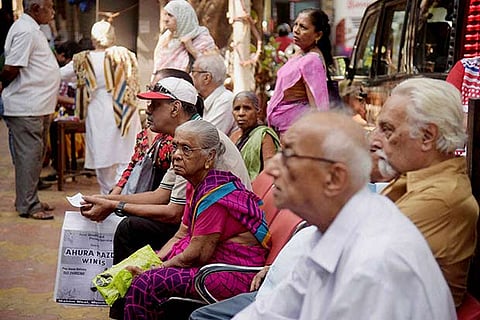
It is not clear whether the reaping of the demographic dividend by India will remain a pipe dream. Still, the country will surely face a huge problem if it doesn’t plan to care for senior citizens, whose numbers will increase in the coming years. It is evident from the proceedings of a recent meeting of the National Council for Senior Citizens that the government is not only cognizant of the challenges but is actively engaged in chalking out plans to ensure a life of dignity and respect for its growing number of senior citizens. By 2047, every fifth citizen is projected to be an elderly person.
India is nowhere near building, maintaining and scaling caregiving systems and institutions to meet future challenges.
India has had a National Policy for Older Persons, which was formulated back in 1999 following a UN General Assembly resolution and followed by the 2011 National Policy for Senior Citizens. Moreover, Article 41 of the Constitution mandates their well-being. Thanks to them, there was a slew of benefits such as pensions, travel concessions, income tax relief, medical benefits, and extra interest on savings, beneficial especially to those belonging to the urban middle class. However, not much progress was made in terms of providing care through old age homes, daycare centres, and healthcare facilities, including ambulances and medical vans.
The two major fears that haunt senior citizens are financial insecurity and lack of access to affordable healthcare. With the tapering off of the old and generous government pension schemes, many elderly, especially those from the middle class and low-income families, will face financial problems. This makes them dependent on others and therefore vulnerable to abuse, which is their third major problem. With people getting used to private and corporate healthcare, the medical expenses of senior citizens become a burden for many families. An added problem is the lack of attendants and caregivers at home or for hospitalised in-patients, especially in urban nuclear family settings.
Now the government is contemplating a new policy which will factor in a new approach that focuses on empowerment and being active, productive citizens, as against limiting them to being the passive recipients or beneficiaries of welfare schemes or doles. To operationalise this paradigm shift is easier said than done. Changing orientation and the underlying belief systems and behaviours associated with them need prolonged and sustained sensitisation and capacity building among government employees, civil society organisations and communities. More importantly, special programmes need to be tailor-made to address the challenges faced by two special categories of the elderly, namely, women and those living in rural areas.
Nowadays, inevitably, every initiative has a digital technology component to it. The ministry is looking at “digital inclusion”, including centralised data systems and leveraging technology for elderly welfare. In the past, policymakers have often been oblivious to the challenges people face in interacting with technology. This was widely reported in the context of Aadhaar, for instance. Besides low levels of digital literacy and mental resistance to technology, senior citizens additionally face cognitive and physical limitations. Some of it could be addressed through awareness programmes and age-friendly design and user interfaces. Needless to say, the technology solutions will be of little utility if they are not supported by real-world people-staffed systems and brick-and-mortar elderly care infrastructure.
