
- Chennai
- Election-2026Election-2026
- Tamil Nadu
- National
- World
- Cinema
- Business
- Sports
- Lifestyle
- Technology
- Videos
- Explainers
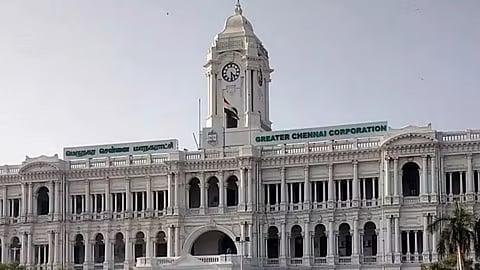
With the Greater Chennai Corporation's decision to reinstate 1,400 cleanliness workers who lost their jobs due to privatisation, a small beginning has been made in securing the employment of workers belonging to the lower-income strata. Even if some detractors might say the government gave in due to political or electoral optics, it indeed is a welcome step and a happy ending to a protracted six-month-long workers’ struggle. It is a partial victory as the protest was not only for reinstatement, but also for job security, regularisation of services, better pay and better working conditions, including the provision of safety gear.
The GCC had justified privatisation as a more efficient way. It is true that citizens can vouch for it, and this was proven in recent years. The question that needs to be asked is why GCC could not deliver results. Also, whether or not GCC is able to make the private operators give a fair deal to workers. Is the deficiency in services and deliverables by government staff due to a systemic flaw? By providing shoddy services, are the government employees and their unions providing valid reasons for privatisation? If privatisation is inevitable, as some have been claiming ever since 1991 liberalisation, then should not the government draw up contracts that ensure job security, better pay and working conditions for the employees who are forced into the private and informal sector?
The larger issue is the increasing shift towards privatisation, outsourcing of services, pushing workers into temporary, contractual jobs, and the overall informalisation of the workforce. Since the government is bound by law, its terms and conditions of employment would be somewhat fair and secure. To cut costs, the government and its departments would resort to privatising or outsourcing of services or employing people on contracts to avoid paying decent wages and give other legitimate benefits. Unfortunately, the private players are able to extract more work by paying less to the workers.
The government’s adamant refusal to give basic rights to ASHA workers is a classic case of systemic devaluation of labour. The Accredited Social Health Activists or ASHA workers, who are the backbone of the public healthcare system, have been demanding in vain to be recognised as government employees and not just “volunteers” which is being done with the intention of depriving them of fair wages and other entitlements while increasingly loading them with work.
In the private sector, there has been a trend towards outsourcing or employing staff as contract workers for most of the job functions relating to support staff. With employment growth nearly stagnating, especially for educated youth, the start-ups came up with gig work, which characterises workers as independent contractors. This loophole absolves them of the responsibilities of an employer to pay minimum wages and provide better working conditions. It is this dubious and exploitative characterisation that lends some “respectability” in name and paves the way for educated youth belonging to middle and lower-income families to take up gig work. And, there is an army of privileged apologists who justify gig work using the specious and questionable argument of “something is better than nothing”. The strikes by GCC, ASHA and gig workers, who mostly hail from underprivileged classes and castes, demonstrate the importance of unions, advocacy and collective action for a fair deal and a push for broader reforms.