
- Chennai
- Tamil Nadu
- India
- World
- EntertainmentEntertainment
- Business
- Sports
- Lifestyle
- Technology
- Videos
- Explainers
- Editor's Picks
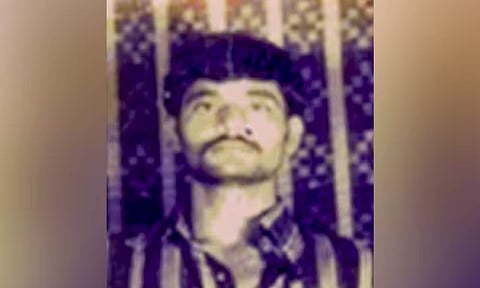
India’s paramilitary forces have dealt a significant blow to the extreme left-wing insurgency in central India by killing Nambala Keshava Rao — better known by his nom de guerre, Basavaraju — in the forests of Abujhmad in Chhattisgarh. The 70-year-old was the General Secretary of the CPI (Maoist), and his death marks a watershed moment in the Indian state’s long battle against left-wing extremism (LWE).
Basavaraju’s killing is not just another name in the long list of top Maoist leaders slain by the state. Unlike other key members of the Central Military Commission who were either killed in combat or stealth like Cherukuri Rajkumar (Azad), Malloju Koteswara Rao (Kishenji), Patel Sudhakar Reddy, and Milind Teltumbde, he is the first apex figure in the CPI (Maoist) to fall to the bullets of the state. He was both an ideologue as well as a general who fashioned military strategy and carried out some audacious attacks on specialised counter-insurgency forces.
This high-profile killing comes amidst Operation Kagar, launched by the government in January 2025. The operation has been projected as the final offensive against LWE, with the ambitious aim of eliminating organised Maoist resistance by April 2026. In the four months since Kagar began, over 90 Maoist cadres have been killed, and at least 130 have surrendered.
Union Home Minister Amit Shah has described Basavaraju’s killing as "historic." From a tactical standpoint, it is. Yet, to believe that this marks the end of insurgency would be a simplification. LWE has survived the deaths of senior leaders before. The CPI (Maoist) has never been an individual-led fighting unit, or a party given to a love of charisma. It will likely struggle to regroup in the short term, but insurgent ideologies often prove more resilient than their leaders. What may emerge now is a more fragmented movement — one made up of smaller, more scattered groups. This may make the security challenge less intense but more unpredictable.
However, framing this conflict purely in military terms is a mistake. Though often portrayed as a war, especially in official parlance, India’s struggle against Maoist insurgency is not akin to a border skirmish. It is, fundamentally, a domestic crisis — a conflict between the Indian state and a militant section of its own citizens asserting the rights of tribal and marginalised communities.
It is vital to acknowledge that LWE did not grow in a vacuum. It emerged from decades of systemic neglect, displacement, and dispossession faced by tribal populations. The mineral-rich regions of central India—Chhattisgarh, Jharkhand, Odisha—are also among its poorest. The very wealth that lies beneath their soil has often been extracted for the benefit of others, while locals see little of the profits and much of the pain. If India is to truly end this insurgency, it must not only defeat armed groups but also win over the communities they claim to represent.
This moment should be seen not as a triumph but as a true reckoning. A reckoning that forces the state to ask not just how it can eliminate militancy, but how it can deliver justice. For even if Operation Kagar succeeds militarily, its legacy will ultimately be shaped by whether it leaves tribal India more secure, more prosperous, and more equal.
