
- Chennai
- Tamil Nadu
- India
- World
- EntertainmentEntertainment
- Business
- Sports
- Lifestyle
- Technology
- Videos
- Explainers
- Editor's Picks
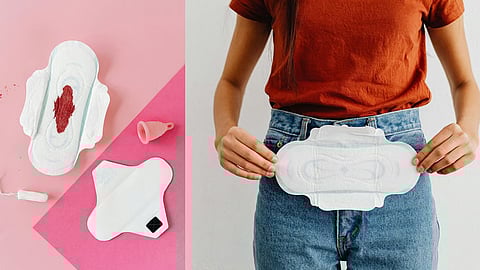
Even after years of advocacy and consequent policymaking and launch of schemes, menstrual hygiene continues to be a major problem, so much so that the Supreme Court had to intervene and order all the states and union territories to ensure that every government and private school provides biodegradable sanitary napkins free of cost to adolescent girls. The order should give impetus to the efforts of governments to make menstrual hygiene accessible to all, especially school-going girls.
Back in 2011, the then UPA government had put together a national menstrual hygiene policy to improve menstrual health, particularly among adolescent girls in rural areas, through awareness campaigns and enabling access to affordable sanitary products. As per the 2001 Census, there were 8.5 crore adolescent girls in the age group 10 to 19 living in rural areas and of them 2.4 crore belonged to the Below Poverty Line (BPL) category. The scheme was being implemented in over 3 lakh anganwadis and 3.7 lakh schools in rural areas. The NDA government not only continued the scheme but also improved it further. Now the Supreme Court directed the scheme to be implemented across the board at a national level in all schools for adolescent girl children from Class 6 to Class 12.
The judgment has far-reaching implications. Firstly, instead of treating it as a health issue, the order recognises the right to menstrual hygiene as an integral part of the right to life under Article 21 of the Constitution.
Secondly, the order makes compliance mandatory and follows up with consequences for non-compliance, which in the case of private schools would be the possibility of derecognition.
Creating the necessary infrastructure and mechanisms in each school is going to be a daunting challenge. Sourcing sanitary pads and providing access through designated authorities or vending machines is relatively less difficult than empowering girls to ask for sanitary pads, and staff are sensitised to provide the necessary support. The order directs schools to set up Menstrual Hygiene Management Corners with not only hygiene products but also disposal bags, and even spare uniforms and innerwear.
Besides the lack of infrastructure, a deeper malaise is the continued prevalence of cultural taboos and discriminatory norms associated with menstruation. At a time when there is a glorification of old religious practices, menstruation will continue to be perceived as a mark of impurity, often leading to overt or covert exclusion of women. Eradicating the stigma associated with menstruation through awareness campaigns is easier said than done. Without awareness and sensitisation, boys could harass or shame a girl, while a teacher could be dismissive or respond with invasive questioning. The answer lies in establishing menstruation as a biological fact shorn of taboos and misconceptions. Talking and discussing openly about it would go a long way in destigmatising it. It also shifts the onus from girls and women to boys and men and emphasises the importance of collective effort.
If schools provide the required facilities, then attendance of girls would improve. Otherwise, a 2016 study found that one out of four girls did not attend school during menstruation due to the absence of facilities. Secondly, it will minimise infections and other related health issues. Lastly, promoting menstrual hygiene through access to scientific information, safe products, and privacy is critical to safeguarding women’s dignity and integrity, which is central to their overall empowerment, assertion and self-esteem.
