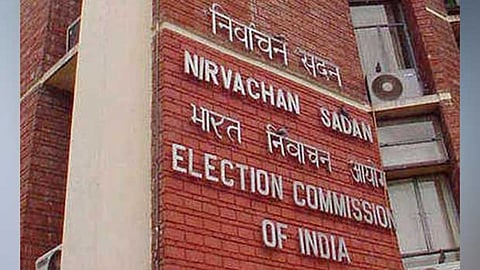

Republic Day homilies this year sound distinctly ironic in the context of all that’s being done by the Election Commission of India (ECI) to enervate India’s democracy. In a message to citizens on National Voters' Day, Prime Minister Narendra Modi described voting as “a sacred constitutional right” and voters as the “bhagya vidhata” (deciders of destiny) of India.
That sentiment simply does not square with the ECI’s arbitrary and ongoing disenfranchisement of millions of voters, even as the republic enters its 77th year. The irony is complete when you consider that National Voters Day commemorates the founding of the ECI on January 25, 1950, one day prior to the birth of the republic. How macabre that one of the near twins is presiding over the eclipse of the other.
The ongoing special intensive revision (SIR) of electoral rolls has become an instrument of exclusion of citizens from the republic, which is directly opposite to the ECI’s self-professed mandate of leaving no voter behind. So far, approximately 7.24 crore voters' names have been deleted from the rolls, provisionally or finally, across 13 states and union territories. That’s about 13.2% of the pre-SIR voter population in these jurisdictions and 7.3% of India's total of 99.1 crore electors.
This hasty overhaul, with deadlines ranging from January 26 to February 7, is likely to translate into a political upheaval when elections are held in these states. We have already seen what it can do in Bihar. There, 65 lakh voters' names were deleted after the slapdash SIR exercise, representing 8.3% of the pre-SIR total electorate of 7.89 crore. This led to an astoundingly one-sided verdict in the subsequent elections, with the two main parties in the ruling coalition each achieving a win percentage above 85%.
Disregarding the outcry from the opposition, voters and both-level officials alike, ECI has pressed on with the SIR in 12 more jurisdictions. Provisional deletions have been steep there as well, with Uttar Pradesh having the highest (2.89 crore), followed by Tamil Nadu (97.38 lakh), West Bengal (58.2 lakh), Madhya Pradesh (42.7 lakh), and Kerala (24.08 lakh).
With elections due in Tamil Nadu, West Bengal and Kerala in a few months, the large-scale and debatable deletions have created a situation rife with suspicion regarding the role of the commission. Any attempt by the BJP to vitiate the atmosphere there with polarising rhetoric risks turning them into tinder boxes. It would be wise, therefore, for the ECI to conduct the remaining part of the SIR process with due deliberation and fairness. Unrest in these vital and identity-proud states will do the republic no good.
Apart from the partisanship of the ECI, well-documented in elections past, the SIR suffers from a systemic bias against poor, rural and migrant voters. They are more likely than other categories of voters to not have the documents demanded by SIR or the resources to fetch them, such as birth certificates or proof of residence or legacy. As Nobel laureate Amartya Sen has said, this class bias is likely to express itself in the election verdict and thereon in governance itself.
Republic Day is a good occasion for the Election Commission to renew its vows to the Constitution. Democracy is its raison d’etre. Without it, what use is it to we, the people?