
- Chennai
- Tamil Nadu
- India
- World
- EntertainmentEntertainment
- Business
- Sports
- Lifestyle
- Technology
- Videos
- Explainers
- Editor's Picks
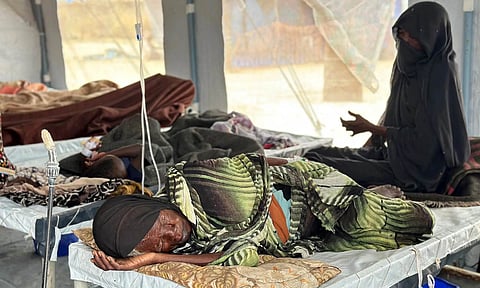
NEW YORK: The cholera ward in Tawila, Sudan, was overflowing the first week of August, a grim sign of what the medical charity Doctors Without Borders said in a release Thursday was “the worst cholera outbreak the country has seen in years.”
International charities have warned that the spread of the disease, no longer contained within Sudan’s borders, might exacerbate similar outbreaks across the region.
“People cross borders,” Sheldon Yett, UNICEF’s representative to Sudan, said in a phone interview Wednesday. “This epidemic has already crossed into South Sudan, and it’s crossing into Chad. Unless we’re able to address this crisis, we risk it rippling across borders for weeks and months to come.”
Sudan has had nearly 100,000 suspected cases of cholera and has reported more than 2,400 cholera-related deaths since the country’s Health Ministry declared an outbreak a year ago, Doctors Without Borders said in its statement. The group said it had documented 40 deaths over the span of one week in the western Darfur region of Sudan alone.
The town of Tawila, in the state of North Darfur, has become a hotbed for disease. The town is about 44 miles from the city of El Fasher, the Sudanese army’s last holdout in the Darfur region that has been under siege for more than a year. The local population has ballooned to include hundreds of thousands of people fleeing nearby violence.
They had sought refuge from the bloodshed in cramped encampments with little infrastructure. But there is little water, health services or hygiene infrastructure to support the new arrivals.
“In displacement and refugee camps, families often have no choice but to drink from contaminated sources, and many contract cholera,” Sylvain Penicaud, a project coordinator for Doctors Without Borders in Tawila, said in the group’s statement.
“Just two weeks ago, a body was found in a well inside one of the camps. It was removed, but within two days, people were forced to drink from that same water again.”
Cholera is caused by ingesting contaminated food or water, and infections can run rampant in areas where people live in crowded conditions with substandard sanitation. Cholera kills by dehydrating victims, often through vomiting and the onset of diarrhea, and its lethality increases when coupled with other factors like inadequate nutrition.
For just pennies, the disease can be easily treated with medication, but only if that medication is accessible.
Sudan, in northern Africa, has been engulfed in deadly violence since the civil war broke out between rival generals in April 2023. The Darfur region, which is primarily controlled by the Rapid Support Forces, a militant group that opposes the Sudanese army, has been hit particularly hard by the war. Its population has suffered mass displacement and disease on top of the bloodshed.
This month, UNICEF reported a surge in cholera cases in Tawila and said that fighting in North Darfur had put more than 640,000 children under the age of 5 at risk of hunger, violence and disease.
Yett, UNICEF’s representative to Sudan, said that the group was trying to mitigate the suffering but that the problem would persist unless the root causes — including war and displacement — were addressed. “As populations move, so does the disease,” he said, adding, “When we think we have it under control in one place, it pops up somewhere else.”
In 2024, the US gave $830 million in emergency aid to Sudan, the United Nations estimated. The Trump administration’s slashing of US aid this year has wreaked havoc in parts of the country where people used to depend on American-funded food kitchens for sustenance.
Yett said aid cuts were amplifying the cholera crisis as well, and he emphasized that, left unchecked, the outbreak risked escalating in other regions where the disease is already tearing through vulnerable communities. A cholera outbreak has already struck a refugee settlement in Chad that hosts people from Darfur and countries that are contending with their own surges in disease.
South Sudan is experiencing “its worst and longest” cholera outbreak, according to the United Nations, with more than 80,000 cases and 1,400 deaths recorded since the outbreak was declared in October 2024. Similarly, the Democratic Republic of Congo declared an outbreak this May, reporting 29,392 suspected cases and 620 related deaths from Jan. 1 to June 8.
Neighbouring Angola experienced “the worst cholera outbreak in almost two decades,” the WHO said in a June report, citing over 26,000 cases and nearly 750 deaths in five months.
Yett, speaking from Port Sudan, noted the weather and spoke grimly of what may come. The rainy season, which can lead to flooding and the mix of sewage with drinking water, has not yet concluded in Sudan.
“Already we’ve got a massive outbreak,” he said, “and the rains are still in front of us.”
