
- Chennai
- Tamil Nadu
- India
- World
- EntertainmentEntertainment
- Business
- Sports
- Lifestyle
- Technology
- Videos
- Explainers
- Editor's Picks
CHENNAI: Leadership comes with a cost, always. Tamil Nadu, being one of the most urbanised and industrialised states in India, is perhaps standing at the intersection of two rushing crises. One, of course, is the growing urban migration, and the other is the intensification of climate risks.
Anticipating this crisis, in December 2023, the World Bank approved a $300 million loan to support the Tamil Nadu Climate Resilient Urban Development Program (TNCRUDP), with the ambitious goal of expanding access to water and sewerage services for over two million people across, the then 21 (now 25) urban local bodies (ULBs), the municipal corporations in particular.
Apparently, the project promises much. However, upon scratching the surface, there lies a deeper problem. There is a dire need to empower local governance and enhance civic accountability, or else even the best-designed interventions risk running dry.
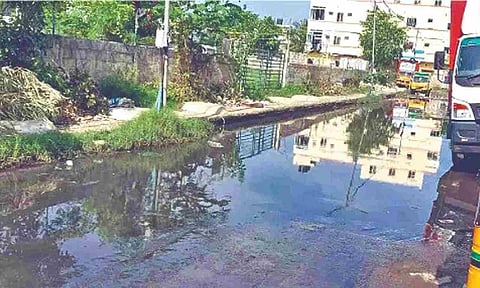
The current agenda is not one of planning on paper; rather, it calls for execution on the ground. According to SBI Research, currently, almost 54% of the state’s population is living in cities. Though Tamil Nadu has been fairly proactive in drawing infrastructure investments, the cities remain susceptible to both water scarcity and sewage mismanagement. For example, even after spending crores of funds on infrastructure, places like Tambaram and Vellore continue to overflow from choked drains and illegal sewage outlets. These disappointments are not just technical, these disappointments stem from deeper institutional fractures like feeble local governments, patchy jurisdictions and tokenistic citizen engagement.
From AMRUT to Swachh Bharat, with robust capital backing, both the Centre and the State have steadily pitched ambitious schemes. However, overlooking the fact that water and sanitation are fundamentally local public goods, perhaps creates a vicious cycle of disappointments and failures. Delivery of these local public goods depends not only on engineering networks but also on the sensitivity, planning capacity, and financial health of local bodies. In reality, ULBs are often stripped of both resources and autonomy despite being envisioned as the frontline of participatory urban development by the 74th Constitutional Amendment. For example, Smart Cities Mission’s Special Purpose Vehicles (SPVs) are frequently empowered to bypass elected urban councils, resulting in a parallel governance structure that may improve execution speed but dilutes democratic oversight. Though TNCRUDP promises to tie funds to performance metrics and governance reforms, past experience shows that such conditions only work when local bodies are first capacitated administratively, fiscally, and legally to manage complex service delivery systems.
The issue of sewerage is particularly acute. According to the 2023 report by the Ministry of Housing and Urban Affairs (MOHUA), less than 30% of urban households in Tamil Nadu are connected to underground sewer networks. Even in Chennai, which boasts the state’s highest coverage, rapid expansion has outpaced maintenance capabilities, leading to frequent
leakages, backflows, and untreated discharge into water bodies like the Cooum and Adyar rivers. The mechanical sewage treatment plants are a welcome step, but without long-term operations and maintenance (O&M) contracts and trained municipal personnel, these facilities often run well below capacity or fall into disrepair.
Rural areas fare no better. Under the Jal Jeevan Mission, Tamil Nadu has made notable progress, with over 64% of rural households now having functional tap connections as of April 2024. However, sustainability remains a concern. Panchayats are expected to manage these schemes post-implementation, but without clear financial devolution, technical training, or digital monitoring tools, many struggle to conduct even routine repairs.
A deeper concern is that citizens are still seen as passive recipients rather than active co-creators of water security. Genuine participatory planning through ward committees, user associations, or social audits remains the exception rather than the norm. Yet, where it has been attempted, such as in parts of Madurai and Thanjavur, local monitoring has led to measurable reductions in non-revenue water losses and improved billing efficiency.
Similarly, the success of rainwater harvesting in Chennai, now mandatory for all buildings, has shown that behavioural change, when institutionalised, can supplement capital investment.
The TNCRUDP does incorporate promising elements: performance-based disbursals, issuance of municipal bonds, and a shift toward outcome-driven implementation through the Program-for-Results (PforR) model. But to ensure these mechanisms do not remain technocratic fixes, they must be anchored in deeper reforms. First, ULBs must be allowed to retain and generate their own revenues more meaningfully, whether through property tax reform, land value capture, or user charges with built-in affordability safeguards. Second, urban service planning must be synchronised across institutions. It is counterproductive for SPVs, municipal engineering wings, and water boards to work at cross purposes. Third, capacity-building must move beyond one-off training and instead develop long-term municipal cadres with embedded accountability.
Crucially, the role of women and marginalised communities, those who bear the daily burden of poor water access, must be central. Programs must go beyond gender-disaggregated indicators and ensure that planning committees, grievance cells, and community water audits include their voices substantively. If implemented with these reforms in mind, Tamil Nadu’s water and sewerage initiative can set a national benchmark. But if left to run on parallel logics of capital expenditure without local empowerment, it risks becoming another piped illusion. Water is not merely a service, it is a test of how democratic, resilient, and equitable our cities aspire to be. For that, it is not just the pipes that need fixing, but the politics and governance around them.
Debdulal Thakur is Professor and Dean at Vinayaka Mission’s School of Economics and Public Policy, Chennai
