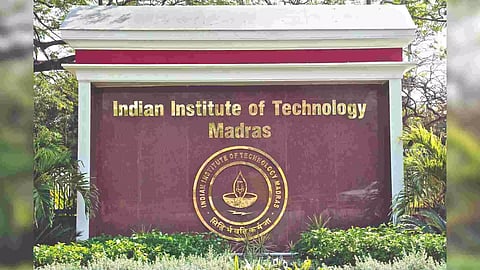

CHENNAI: A team of scientists from the Indian Institute of Technology Madras (IIT-M) and the Technical University of Denmark has discovered how interactions between genetic variants can activate dormant cellular pathways, offering new directions for research into complex human diseases.
The study, led by IIT-Madras scholar Srijith Sasikumar and Prof Himanshu Sinha from the Department of Biotechnology, in collaboration with Shannara Taylor Parkins and Suresh Sudarsan of the Technical University of Denmark, was published on August 27 in Nature Communications. The paper is titled ‘Interaction of genetic variants activates latent metabolic pathways in yeast’.
They showed that two specific genetic variants in yeast — MKT1 (89G) and TAO3 (4477C) — together activated an otherwise hidden arginine biosynthesis pathway. This interaction also suppressed ribosome production, creating a metabolic trade-off that enhanced sporulation efficiency. The pathway was essential for mitochondrial activity only when both variants were present, establishing how gene–gene interactions can generate new dependencies in cells.
“The study provides a framework for examining how combinations of genes influence the onset and progression of diseases such as cancer, diabetes, and neurodegenerative disorders,” stated Prof Sinha. “By combining multi-omics with temporal analysis, we can capture not just which pathways were affected, but when and how these changes occurred.”
Sasikumar added that it was like flipping two switches together. “Suddenly a hidden circuit turns on, and the system responds differently,” he noted.
The findings have potential applications in identifying biomarkers and drug targets for precision medicine, engineering metabolic pathways in synthetic biology, and designing stress-tolerant crops or industrial microbes for biotechnology, a release from the institute added.