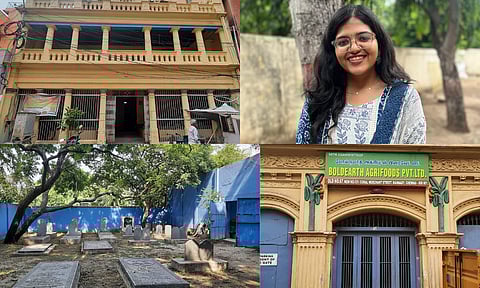

CHENNAI: In the heart of George Town lies Coral Merchant Street (CMS), known in Tamil as Pavazhakara Theru. Today, it is better known for exports and logistics, its lanes packed with hardware shops, cargo offices, temples, and lungi distributors. With very few physical markers left, the street’s rich history now survives largely in memory.
The street earned its name from the coral trade that flourished here during colonial times. By the 17th century, Portuguese Jews, known locally as Paradesi Jews, had settled in CMS, part of a larger wave of Jewish migration to India. In Madras, they traded in diamonds from the Golconda mines and imported coral beads from Europe. While they dealt in both diamonds and coral, it was coral that gave the street its identity: in diamonds, they were middlemen, but with coral, they polished and sold directly from their homes.
Between the 1680s and 1780s, Jews dominated much of Madras’s diamond trade through their European connections and expertise in gems. In the early 1600s, the Amsterdam Sephardic community built Madras’s first synagogue and cemetery right on Coral Merchant Street. A second synagogue followed in 1644 at Peddanaickenpet.
By the 18th century, however, the Golconda diamond mines had run dry, and with new deposits discovered in Brazil, Jewish merchants shifted to other businesses. Many emigrated, and after Israel’s formation in 1948, most left permanently. The Peddanaickenpet cemetery was demolished, and its tombstones were shifted multiple times before being moved to their current location on Lloyds Road, the only tangible reminder of the community. Among the last to remain were the Levi family. Today, David Levi’s family lives abroad, carrying with them the final traces of Madras’s Jews. Their belongings - silver-bound texts, ritual objects, and relics from the synagogues remain carefully packed, awaiting transfer to the ASI.
When the Jews left Coral Merchant Street, they paved the way for another trading community—the Nattukottai Chettiars. Drawn by the port, they built viduthis (traveller hostels), and the street was soon lined with their signature mansion-like buildings. These viduthis served as pit stops for their business travels, as Chettiars spread far and wide - Myanmar, Sri Lanka, Singapore, and Malaysia all became centres of Chettiar enterprise, with Myanmar (then Burma) seeing their largest investments.
For the Chettiars, business and faith went hand in hand. “Chetty kappalukku Senthuran thunai” captured their belief that Lord Murugan safeguarded their ships. Wherever they went, temples followed, supported by mahamai (tithes) that funded festivals and viduthis. Chennai has several viduthis, from Chrompet to Ambattur. CMS alone has three: Karaikudi (locally called Periya Madam), Devakottai (Chinna Madam), and Rangoon.
Karaikudi and Devakottai accommodate only men and house idols of Lord Muruga with his consorts, with regular rituals. While Rangoon Viduthi is open to families, these viduthis now also host intimate weddings and small ceremonies. Kinship remains central. During Masi Maham, silver and wooden chariots bearing Murugan and his consorts travel 9 km from the Karaikudi and Devakottai viduthis to the Tiruvottiyur viduthi, drawing about 7,000-12,000 people over five days. The Tiruvottiyur viduthi, the largest in Chennai, stands out for its Chettinad architecture.
Today, Coral Merchant Street looks very different from its past as a coral and diamond trading hub. Most of the mansion-like houses have been pulled down, some due to disputes, others for convenience, leaving only the three viduthis and a handful of trust-owned warehouses. With businesses crowding the area and Chennai expanding southward, many long-time residents are moving out, taking with them the last traces of the street’s historic character.
The writer researches in-depth and documents arts, crafts and heritage through her Instagram page called Namma Stories