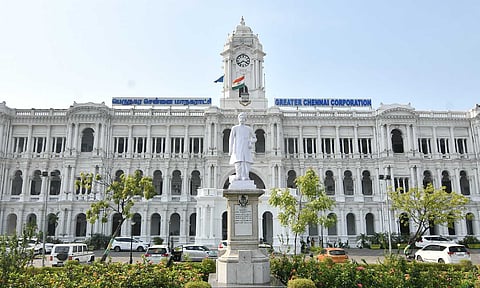

CHENNAI: Pointing out a study conducted in New Delhi on the contribution of waste-to-energy (WTE) plant to Urban Heat Island (UHI) effect, Poovulagin Nanbargal, an NGO, urged the Greater Chennai Corporation to drop the proposed WTE project in Kodungaiyur.
“The People’s Alliance for Waste Accountability’s report titled, ‘Burning Waste, Warming Cities?’ highlights the impact of WTE in Delhi. It explains that the heat island effect is higher near WTE than the thermal power plants. The WTE plant emits 398 million cubic metres of gas at a temperature of 200 degrees Celsius every day,” a statement from the NGO said.
It added that urban areas trap more heat even at night. A study by the State Planning Commission also revealed that UHI in Chennai and Tiruvallur has increased by 3 degrees Celsius. “Already, there are more than 40 red category industries in North Chennai that emit pollutants. Setting up a WTE in Kodungaiyur will exacerbate the problem,” the statement said.
Presently, WTE plants in Okhla, Ghazipur, Bawana and Tehkhand in Delhi burn about 7,250 tonnes of waste, which is 66% of the city’s waste generation. Delhi has been severely impacted by UHIs and scientific studies conducted by IIT-Delhi have shown that heat island intensity, the difference in temperature between a city and the surrounding rural areas can be as high as 8.3 degrees Celsius, the report said.
It also explained that heat was emitted from garbage drying and storage pits due to exothermic processes by certain microorganisms apart from operation of furnaces at a temperature range of 950-1,200 degrees Celsius. “Incineration of one ton of MSW releases about 5,500 cubic metres of flue gas at around 200 degrees Celsius. This is a significant contribution to the urban heat especially when huge quantities of waste are incinerated daily,” the report said.