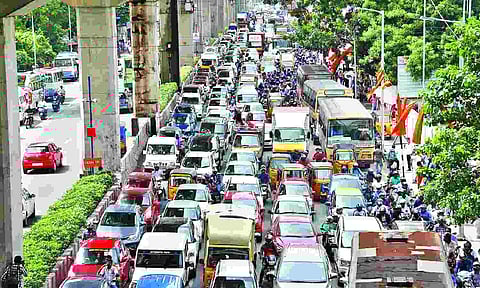

CHENNAI: In a move that will reduce erratic parking and ensure better safety and mobility for commuters, the state government plans to implement a new parking policy for Chennai, one that encourages people to use public transport to reduce traffic congestion and unorganised parking.
Here are 10 things to know about the city's new parking policy:
Aim
The policy developed by the Chennai Unified Metropolitan Transport Authority (CUMTA) aims to promote public transport, reduce traffic congestion, and encourage organised parking
Coverage
The parking policy for the Chennai Metropolitan Area (CMA) covers 5,904 sq km including Chennai, Tambaram, Avadi, Kancheepuram, 12 municipalities, 13 town panchayats, 22 panchayat unions and one special grade town panchayat
Authority
A centralised Parking Management Unit (PMU) under CUMTA will oversee fee collection, enforcement, and infrastructure development
Strategies
The policy will implement area-level parking management, demand-based pricing, and advanced technology to manage parking
Pricing
Parking fees will vary based on vehicle size, parking duration, area demand, peak or non-peak hours and location
Customisation
Different areas will have customised parking management strategies and also have surge pricing plans to control demand.
Freight Management
Truck terminals will be asked to relocate to restrict on-street freight parking
Regulations
Offices with over 100 employees must encourage the use of public transport. Schools should have designated timings and pick-up/drop-off zones
Commercial Parking
Commercial areas will have integrated traffic management and multi-level parking along with EV charging points
Revenue
The revenue from parking fees will be used for improving local infrastructure like footpaths and cycling tracks and to enhance pedestrian safety