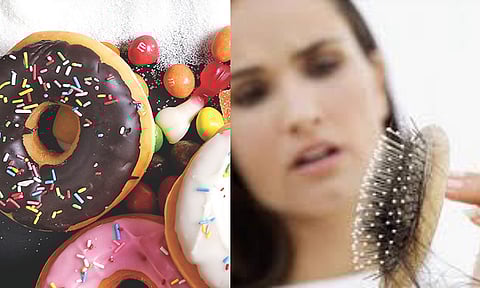

CHENNAI: IT is often said that good things should start with something sweet. While this sentiment is heartwarming, the reality is that sweets can be more harmful than we think—especially for our hair health. The danger lies in the high sugar content found not only in desserts but also in processed foods, junk foods, and alcohol.
Recommended sugar intake
For a healthy adult, the recommended daily sugar intake is about 25–40 grams, which can be achieved with just 3–4 teaspoons of sugar. However, in today’s diet, sugar is consumed in much larger quantities – often hidden in packaged snacks, soft drinks, pastries, and even savoury processed foods. This excessive intake poses risks not only to overall health but also to the condition of our hair.
How sugar affects hair health
When we consume high amounts of sugar, our blood sugar levels rise rapidly. In response, the body releases insulin to regulate these levels. However, elevated insulin levels increase the activity of an enzyme called alpha-5 reductase. This enzyme plays a crucial role in converting testosterone into dihydrotestosterone (DHT).
DHT is a known mediator of hair loss, especially in individuals with a genetic predisposition to androgenetic alopecia (pattern baldness). Increased DHT levels can shrink hair follicles, shorten the growth phase, and eventually lead to thinning hair or baldness over time.
Those at risk should be cautious
For individuals who are already genetically susceptible to hair loss, excessive sugar consumption can speed up the process. While occasional indulgence is unlikely to cause immediate damage, frequent high-sugar intake creates a hormonal environment that is unfavourable for healthy hair growth.
A balanced approach
Completely cutting out sugar may not be realistic for everyone. However, reducing sugar intake can significantly benefit both hair health and overall well-being.
Opting for natural sources of sweetness, such as fruits, and avoiding unnecessary processed sugars can help maintain healthy insulin levels and reduce DHT production.
Sweets may bring instant joy, but their long-term effects – especially on hair – are far from sweet. By being mindful of sugar consumption, we can protect not only our overall health but also the vitality and longevity of our hair.