
Pachyderms in the penthouse
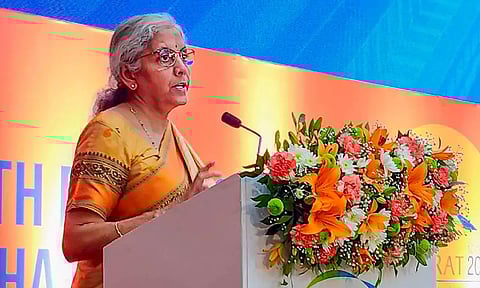
Finance Minister Nirmala Sitharaman will present the interim budget on Feb 1 ahead of the Lok Sabha elections. This will be her record sixth budget, a distinction that puts her in the league of former PM Morarji Desai, and surpasses Arjun Jaitley (who has presented five budgets). She will also become the Finance Minister from the BJP camp to have presented the most number of budgets. This will be an ‘interim budget’ or a vote on account budget for the financial year 2024-25, a stop-gap arrangement of sorts until the next government is voted to power.
A vote on account is a formality of an outgoing government seeking interim permission from the Parliament to withdraw funds from the Consolidated Fund of India and utilise them towards expenditures and government schemes for a few months, until a new government is formed post the polls. Sitharaman says not to expect spectacular announcements. For good reason too — the highly-encouraging results of elections conducted in a few states last year have strengthened the morale of the ruling dispensation. And that perch ensures there is no pressing need for populist measures, such as doling out election freebies.
Observers believe Sitharaman and Co might still pull a few rabbits from the bahi khata that are representative of a full fledged budget. Our short-term mandate includes achieving the $5 trillion economy over the next three years. As the world’s fastest growing economy, we are racing to unseat Japan (and Germany) as the world’s third largest economy. But can the budget expedite these aspirations into hyperdrive?
To make sense of this, it is essential to pinpoint India’s economic locus. There’s less than a quarter remaining to go in FY 2023-24, and the government has met 81% of its direct tax collection target. At Rs 14.7 lakh cr, direct tax inflows (net of refunds) were 19.4% higher than a year back, prompting experts to surmise that the exchequer’s net direct tax mop-up could surpass the budget estimate of Rs 17.2 lakh crore by around Rs 1 lakh cr, keeping in mind the year’s uptick in tax collection at 18%. The revenue surge and widening tax filing base have given the government reasons to exhale, even as it continues with fiscal consolidation. Analysts are hedging bets on India marginally missing this year’s fiscal deficit target of 5.9% of GDP.
We must shine some light on the two pachyderms in the penthouse — the failure to generate adequate employment, and the all-pervasive bane of economic inequality, aggravated by inflation. After a rise in salaried jobs in last two decades, the rate of regular wage creation stagnated since 2019 owing to the pandemic and growth slowdown, the State of Working India report said. While unemployment might be dropping, it is still high — above 15% for university graduates of all ages and around 42% for graduates under 25. Just last week, thousands of job aspirants flocked a recruitment centre in UP that was looking for construction workers to be deployed in the conflict-ridden Israel.
Policy analysts have highlighted how the expanded consumption (and savings) base of our population’s bottom half can be leveraged as India’s biggest driver of growth. Putting more cash in their hands can translate into a virtuous cycle — we are seriously looking at tax reforms, and simplified processes for individuals and corporate India.