
Sharon Thambala
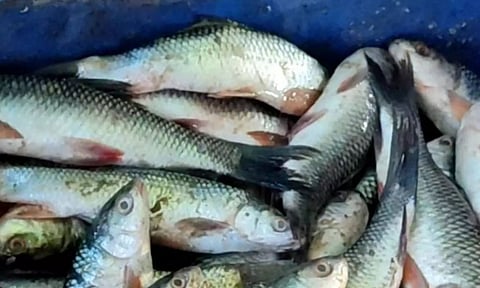
Every monsoon season, for about two months, a small fish called Pulasa, which swims upstream into the distributaries of the mighty Godavari river from the Bay of Bengal to spawn and breed, creates a gastronomic stir in the scenic Godavari districts of Andhra Pradesh.
But, sadly, this fish has become rare in recent times.
Known as Pulasa in Telugu and Hilsa Ilisha in English, this migratory anadromous fish species is a prized delicacy, which commands a fortune and the spicy curry made out of it is fondly presented to politicians, bureaucrats, celebrities and eminent people as a goodwill gesture during a brief window of time.
B Gopal Rao (44) from Dowleswaram in East Godavari district lamented this scarcity, fondly recalling that he had relished pulasa curry more often during his childhood than now. Such is the popularity of Pulasa curry that it inspired the Telugu maxim ‘pustelu ammiaina pulasa tinali', which translates to one should eat pulasa even by selling the 'mangalsutra'.
S Angeli, additional director of Fisheries Department, noted that the overwhelming demand and excessive fishing of pulasa for its lip-smacking taste is putting the species at risk as they cannot be bred artificially like other fish through aquaculture for consumption.
Over time, hilsa catch is increasing in the sea and plummeting in the rivers. It was abundant in the 1990s, but gradually diminished over the years to very low levels today.
As per Elsevier, a 145-year-old Dutch scientific journal, decreasing water discharge from upstream rivers, heavy siltation, indiscriminate exploitation of juveniles, disruption of migration routes and loss of spawning, feeding and nursery grounds, coupled by overfishing, is contributing to their drop in riverine prevalence.
She stressed the need for a focused study on the spawning grounds of hilsa in the Godavari River to declare them as protected areas.
According to Angeli, pulasa fish enter the Godavari river during the flood season, swim upstream against the strong current for thousands of kilometres of marine sea water to lay eggs.
“This migration and spawning process occurs between June and August. After laying eggs, they (hilsa or pulasa fish) return to the sea around October. Pulasa fish transforms in taste and colour when they enter the freshwaters of the Godavari,” said Angeli.
She noted that the pulasa fish found in the delta are also particularly flavorful, especially in areas where the fresh Godavari river water mixes with seawater near Narsapuram in West Godavari district.
The blending of freshwater and saltwater (estuarine conditions) gives pulasa its unique taste, she said, and added that the fisherfolk classify female pulasa as ‘chenal' and male as ‘goddu'.
“The female fish is especially prized for its richer taste and commands a higher price. Though the fish has many bones, its preparation is key —traditionally cooked in clay pots over firewood. Pulasa tastes better after sitting for several hours,” said the additional director.
According to Gopal Rao, cost of authentic pulasa fish will range up to Rs 10,000 per kg.
Angeli explained that Pulasa fish caught near Yanam and Kotipalli are cheaper as they have just entered the river from the sea, and those caught from Kapileswarapuram and Alamuru are a bit pricy. But, the most expensive are the ones caught near Dowleswaram and Pottilanka, owing to their rich flavour.