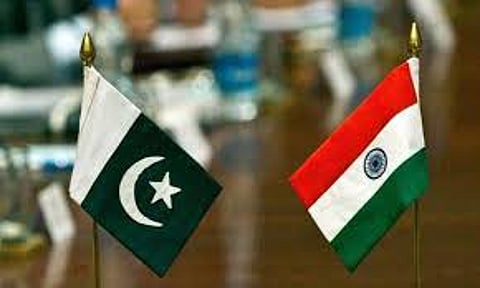

NEW DELHI: The latest report of the Stockholm International Peace Research Institute (SIPRI) on global military spending should provide some sobriety to public discourse amid all the easy talk of war between India and Pakistan. Its findings make it amply clear that the world has become a tinderbox that can be set off by a spark.
According to SIPRI’s Trends in Military Expenditure Report for 2024, global expenditure on defence reached a record $2.7 trillion in 2024, a rise of 9.4% over 2023, the steepest since the end of the Cold War. This growth occurred across all global regions, driven by escalating geopolitical tensions, particularly in Europe and the Middle East. Over 100 countries increased their defence budgets in 2024, at the cost of spending on health, education and welfare.
In Europe, defence budgets rose by 17% due to the Russia-Ukraine war. While the combatants Russia and Ukraine threw 7.1% and 34% of their respective GDPs into the war, other European powers steeply increased their budgets in apprehension of a spread of the conflict. Germany increased its military spending by 28% to $88.5 billion, marking its highest level since reunification and vaulting it into fourth place in the world.
With Trump returning as President of the US and threatening to cut back on funding NATO, we are likely to see further acceleration in defence spends in the years ahead, both in Europe and the Indo-Pacific. All 32 NATO members increased their military expenditure in 2024 and at least 18 of them have resolved to exceed their ceiling of 2% of GDP.
In the Middle East, with Israel going on a rampage funded by the US, the entire region is in conflict mode. In East Asia, with China continuing its three-decades-long sequence of defence spending increases, several countries are arming up as well, Japan alone raising its budget by 21%.
South Asia is no exception to this trend. India was the fifth-largest military spender in 2024, allocating $86.1 billion to defence. Seen in terms of share of GDP, India’s military budget is more modest than many, at 1.9%, which is below the global average of 2.5% and lower than previous years. In contrast, Pakistan spent $10.2 billion on its military. That’s barely 11.8% of India’s expenditure.
Apart from the many imperatives for avoiding war at all costs, both India and Pakistan have good reason to silence the war cries being heard on both sides of the border. In New Delhi’s case, a significant portion of its defence budget is allocated to salaries and pensions to cut back on which it has been reducing its personnel through devices like the Agniveer programme. These cutbacks are attracting the wrath of military analysts in the wake of the Pahalgam killings. Ratcheting up tensions with Pakistan now is likely to bring these programmes under the media glare and cause embarrassment to the regime.
As for Pakistan, its ill-advised adventures in Kashmir and Afghanistan have come home to roost, reducing it to an IMF basket case. As of 2024, it could only allocate 1.7% of its GDP to defence, down from around 2% in 2023. It is a country barely getting by, with 50% of its federal budget going to debt servicing.
If that’s not chastening enough, it is clear from the SIPRI report that a conflict in South Asia is very likely to be the spark that sets off the tinderbox that the world is now.