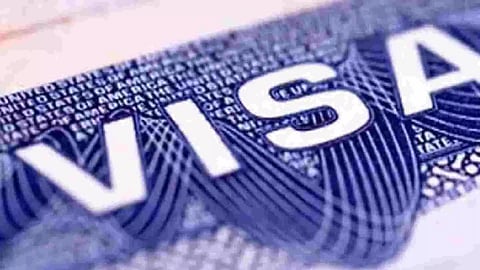
The Trump administration continues to be on a collision course with higher education institutions in the US. There seems to be no let-up in the unseemly confrontation as the US government has cranked up the pressure by firing yet another salvo by halting the scheduling of student visas so that it could put in place a rigorous social media vetting system. It is not yet clear what the criteria would be, but one could hazard a guess given the recent controversies surrounding the targeting of students who were not only critical of Israel’s disproportionately vengeful war against Palestine, bordering on genocide, but also US complicity.
The order on student visas was preceded by several other actions, especially against the venerable Harvard University, which included a bid to choke federal funds either by freezing grants and contracts or by prohibiting the intake of foreign students, who are a major source of revenue.
Harvard University resisted the strong-arm tactics while some universities fell in line. Many universities chose to play safe and stay away from the administration’s punishing glare, often earning the wrath or displeasure of students. It can be argued that the anti-Israel protests on US university campuses occasionally crossed the line of righteous protest and veer into anti-Semitism, often by a small, radical section of protestors. But it is easy to conflate the genuine rage against Israel’s war and anti-Semitism and use it as a ruse to mount an attack on universities and their students. If the administration did genuinely want to fix the problem, it could have chosen a strategy involving debate and persuasion, instead of using a sledgehammer to crack a nut.
Another ironical aspect and something which Trump supporters tend to miss is the incompatibility between their claims of being free speech champions while brazenly curbing dissent in academia and media, which are two sources of critical thinking which could challenge the regime’s wild assertions, misinformation and conspiracy theories. The dismay and bewilderment among Trump voters, particularly those from minorities and persons of colour such as Indians and Asians, could be bemusing because Trump is doing precisely what he said he would. Indian Americans and citizenship-aspiring NRIs who enthusiastically supported Trump could be experiencing buyer’s remorse.
Many US analysts are critical of the targeting of educational institutions. Their concerns stem not from an academic freedom and autonomy perspective but from the fact that the administration might be squandering the soft power these hallowed institutions brought to the US. Secondly, the US could dominate discourses and shape narratives, especially against its rivals, due to its leadership position in the global education system. Thirdly, the US owes its success in the fields of science, technology and consequently business to brilliant immigrant minds. The fear is that this elaborate, interconnected system to establish and maintain American global dominance, built over decades, may get dismantled during one presidency.
What will be the implications for Indian students? Many bright students, especially from the humanities, with an innate sense of idealism and critical thinking, might choose other Western universities outside the US, where there’s relatively more academic freedom. The new visa system may not adversely affect STEM students from India because most are either politically ignorant, apathetic, or actively pro-establishment. It will be a win-win situation for them and the US government and its technocrat supporters.