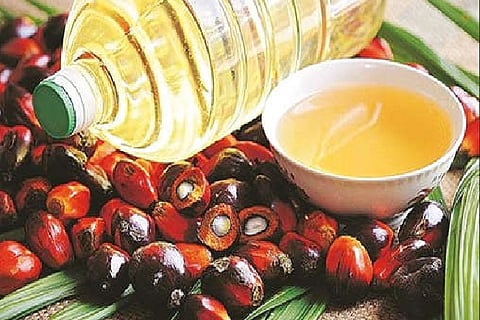

Food is one of the most contested and disputed subjects, especially with the proliferation of social media content and its indiscriminate sharing. Consumers are inundated with conflicting versions and even unscientific opinions, and fake news. The latest controversy surrounds the raising of the “palm oil is unhealthy” bogey by some food companies and food “influencers”. The Indian Food and Beverage Association (IFBA) decried the increasing use of “No Palm Oil” labels on consumer products and labelled it as misleading and a marketing gimmick.
Palm oil is produced and consumed in India, but large quantities are imported too. It is not only allowed but also regulated by the government, which has formulated related standards. The Food Safety and Standards Authority of India (FSSAI), for instance, has regulations and standards for its production, refining, and labelling. Secondly, the 24th edition of the Indian Council of Medical Research and the National Institute of Nutrition’s “Dietary Guidelines for Indians” has not only highlighted its nutritional value but also indicated that palm oil can be beneficial if consumed appropriately. So much so that the Indian government has the National Mission on Edible Oils – Oil Palm (NMEO-OP) to boost domestic production.
It is equally true that there are studies conducted by reputed institutions which have reported links between palm oil consumption and cardiovascular or heart diseases. But then there are also other studies which say that it does not pose additional risks if consumed in limited quantities as part of a healthy diet. But in support of their concerns, the critics and detractors of palm oil point to the presence of high saturated fat content, which is a scientific fact. Common people fall prey to the catchy and provocative claims made by social media influencers who tend to generalise and quote findings selectively and often without taking into account the nuanced arguments, the context, the disclaimers, and the limitations.
While it is possible to give the benefit of doubt to medical and scientific organisations regarding the health benefits of palm oil when consumed in the right quantities, it is difficult to disregard or sweep under the carpet the evidence-based claims of environmentalist groups which oppose the promotion of widespread palm oil cultivation in India. The government has set ambitious targets under the NMEO-OP for 2025-26: To increase the area of oil palm cultivation by nearly three times to 10 lakh hectares, of which half would be in the ecologically sensitive and biodiversity-rich northeastern states. Also, plans are afoot for increasing consumer awareness to maintain the consumption level of 19 kg/person/annum till 2025-26. Environmentalists warn of threats of extensive deforestation, loss of biodiversity, water scarcity and increased greenhouse gas emissions. But the government has its reasons to go ahead on a mission mode: reduction in dependence on imports by achieving self-sufficiency in edible oil production.
Of course, to further justify its mission, the government points out that it would increase the incomes of farmers, which does not factor in the long gestation period of four to five years.
Everyone seems to be missing the forest for the trees. Given the conflicting perspectives and interests and resulting hardening of positions, it is important for the government and the industry to address and allay fears about health and environmental risks and if necessary, dial down the hasty execution of nature-altering schemes.