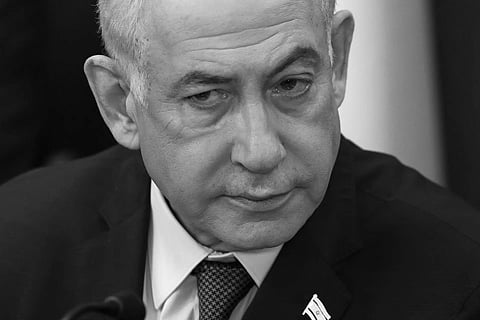

It has become clear that Prime Minister Benjamin Netanyahu of Israel is not the leader for this critical moment. The devastation of Gaza is at intolerable levels and getting worse; the Israeli government is under intense pressure from the families of hostages to do far more to free them before they perish; the United States and Arab states, anxious to avoid a regional war, are trying to mediate an end to the conflict. But Netanyahu blocks the way.
As a majority of Israelis and their allies can see, Netanyahu and his insistence on “total victory” over Hamas, with no consideration of the consequences or costs, have become a part of the problem. He is playing a cynical game, using the war to serve his political ends, and Israelis, most of whom support the effort to wipe out Hamas, are getting tired of it.
He has even managed to alienate Israel’s most important ally. Despite President Biden’s display of total support for Israel — and Netanyahu — after the atrocious attack by Hamas on Oct. 7, including the president’s personal visit to the Jewish state, Netanyahu has deliberately and publicly defied American advice as contrary to Israel’s “vital interests.” A particularly contentious conversation in late December ended with Biden angrily declaring, “This conversation is over.” It was a month before Biden phoned again. The problem is not necessarily Netanyahu’s hawkish stance, which is shared by many Israelis enraged by the barbaric Hamas raid. It is Netanyahu’s confusion of leadership with political survival, with the widespread perception that he opposes any negotiated settlement and any American advice or mediation not because he really believes they run counter to Israelis’ interests, as he claims, but because appearing to stand up to “American pressure” and portraying the Gaza war as a far broader conflict about a Palestinian state and Iran serve his political ends.
That, at least, appears to be what a majority of Israelis believe, even those who might otherwise align with the prime minister’s insistence on trying to fully eradicate Hamas. According to a political poll taken in late December, only 15 percent of Israelis wanted him to stay in office after the war ended.
Beyond Israel’s borders, the scale of casualties and destruction in Gaza is increasingly drawing horror. According to the health ministry in Gaza, more than 26,000 people have been killed, and vast tracts of the narrow strip of land have been leveled. On Friday, the International Court of Justice in The Hague, part of the United Nations, said that Israel must take action to prevent acts of genocide by its forces in Gaza, as well as to allow more aid into the enclave. The ruling, an initial step in a case brought by South Africa accusing Israel of genocide, stopped short of calling on Israel to immediately suspend its military campaign, but it contributed to the pressure on Israel to find ways of disengaging.
How the war ends, however, and what happens after Gaza, as Israeli commentators phrase it, strongly depend on who is in charge. Key members of the war cabinet formed to manage the fighting, Benny Gantz and Gadi Eisenkot, both former military chiefs of staff, are known to differ strongly with Netanyahu, especially on the painful question of the Israeli hostages held by Hamas, believed to be 129 women and men.
Israel has historically gone to great lengths to get back captives and even the remains of those who perish, so the fate of the hostages is central in the internal Israeli debate on the war.